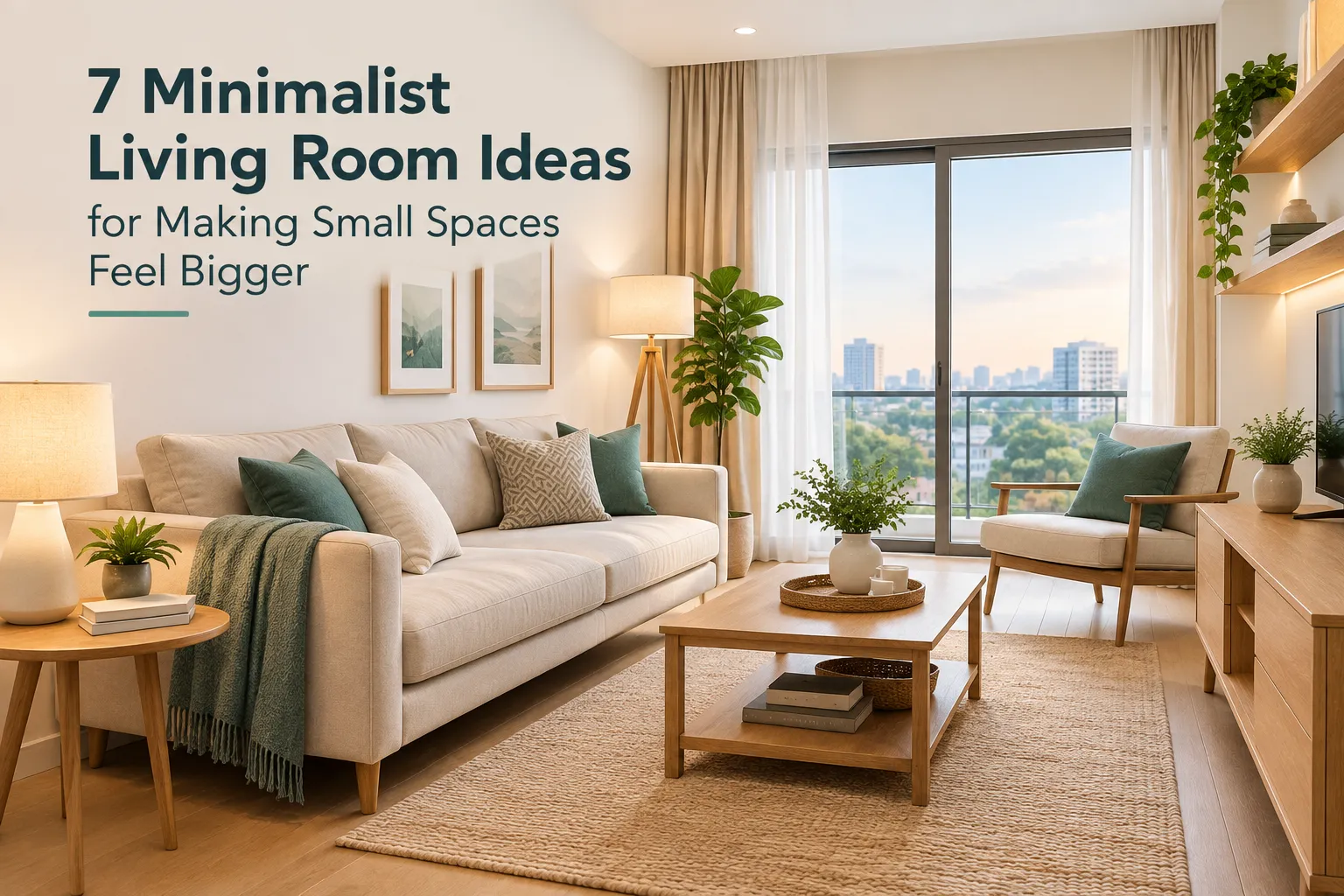
A small living room doesn’t have to feel cramped or uncomfortable. With the right layout, furniture, colours, and lighting, even a compact space can feel open, bright, and inviting.
Minimalist interior design is especially effective for smaller living rooms because it focuses on simplicity, functionality, and visual space. Instead of filling the room with furniture and decorations, the goal is to make every element work without overwhelming the space.
Here are 7 minimalist living room ideas that can help make your small living room feel bigger.
1. Choose Furniture That Fits the Space
One of the biggest mistakes in a small living room is choosing furniture that is too large.
A bulky sofa can quickly dominate the room and make the available floor space feel even smaller. Instead, look for furniture with proportions that match the size of your room.
Consider:
- Compact sofas or apartment-sized sectionals
- Slim armchairs
- Furniture with raised legs
- Narrow coffee tables
- Small side tables instead of bulky cabinets
Furniture with visible space underneath can also make the floor feel more open, creating a lighter visual appearance.
Tip: Before buying furniture, measure the room and create a simple floor plan. This can help you understand how much space each piece will actually occupy.
2. Keep the Colour Palette Light and Simple
Colour can dramatically influence how spacious a room feels.
Light and neutral colours such as white, cream, beige, light grey, and soft taupe reflect more light and can make walls appear to recede.
You don’t have to make everything completely white. A minimalist living room can still have personality through subtle accent colours.
For example, combine:
- Warm white walls
- Natural wood furniture
- Cream or beige upholstery
- Soft grey textiles
- Small teal or green accents
Keeping the main colour palette simple creates visual continuity and prevents the room from feeling busy.
3. Make the Most of Natural Light
Natural light is one of the easiest ways to make a small living room feel larger.
Whenever possible, avoid blocking windows with large furniture or heavy curtains. Use lightweight curtains that allow plenty of daylight into the room.
You can also position your furniture so that it doesn’t interrupt the flow of natural light.
If privacy is a concern, consider:
- Sheer curtains
- Light-coloured blinds
- Layered window treatments
- Curtains mounted higher and wider than the window
A bright room generally feels more open and spacious than a dark one.
4. Use Mirrors to Create the Illusion of Space
Mirrors can be a powerful tool in a small living room.
A strategically positioned large mirror can reflect natural or artificial light while creating the impression of another visual layer in the room.
Try placing a mirror:
- Opposite a window
- Behind a sofa
- Across from a light source
- On a large empty wall
For a minimalist look, choose a mirror with a simple frame rather than an overly decorative design.
A large mirror can also act as a statement feature without taking up valuable floor space.
5. Reduce Visual Clutter
Minimalism isn’t simply about owning fewer things. It’s also about creating a clear visual flow.
Too many decorations, books, cushions, plants, and accessories can make a small living room feel crowded.
Instead, carefully select a few pieces that add character to the space.
For example, rather than displaying ten small decorative objects, you might choose:
- One large piece of artwork
- One statement plant
- A small collection of books
- A simple decorative bowl
- A few carefully selected cushions
Storage is equally important. Use baskets, cabinets, ottomans, or built-in storage to keep everyday items out of sight.
A simple rule: If something doesn’t serve a purpose or add meaningful visual interest, consider whether you really need it.
6. Choose Multi-Functional Furniture
When space is limited, furniture that performs more than one function can make a significant difference.
A small living room benefits from pieces that provide additional functionality without requiring additional floor space.
Consider:
- An ottoman that doubles as storage
- A coffee table with shelves
- A sofa bed
- Nesting side tables
- A storage bench
- Wall-mounted shelving
This approach allows you to maintain functionality while reducing the number of separate pieces of furniture in the room.
The result is a cleaner layout with more usable floor space.
7. Layer Your Lighting
Good lighting can completely transform the feeling of a small living room.
Instead of relying on a single ceiling light, create layers of lighting at different heights.
For example, combine:
Ambient lighting: Provides general illumination throughout the room.
Task lighting: A floor or table lamp can provide focused light for reading or other activities.
Accent lighting: Small lights can highlight artwork, shelves, architectural details, or plants.
Warm white lighting can also make the room feel more comfortable and inviting, particularly in the evening.
A combination of natural daylight during the day and layered artificial lighting at night can make a compact living room feel much more dynamic.
Create More Space Without Adding More Space
Making a small living room feel bigger isn’t necessarily about physically increasing the room’s size. It’s about controlling how the space is perceived and used.
By choosing appropriately sized furniture, keeping the colour palette simple, maximizing natural light, reducing clutter, and using smart storage solutions, you can create a living room that feels comfortable without feeling crowded.
The key is to give every element a purpose and leave enough visual breathing room between them.
A minimalist living room doesn’t have to feel cold or empty. With natural materials, warm lighting, comfortable textures, and carefully selected accents, even a small room can feel stylish, functional, and welcoming.
Final Thought
When designing a small living room, don’t focus only on what you can fit into the space. Think about what you can remove, simplify, and improve.
Sometimes, creating the feeling of more space starts with having less.